Wednesday, November 05, 2014

Khadi Threatened As A Brand

Since India opened its economy in the 90s, the government seems to be repeatedly caught by surprised by the need to protect the collective intellectual property of Indian culture.

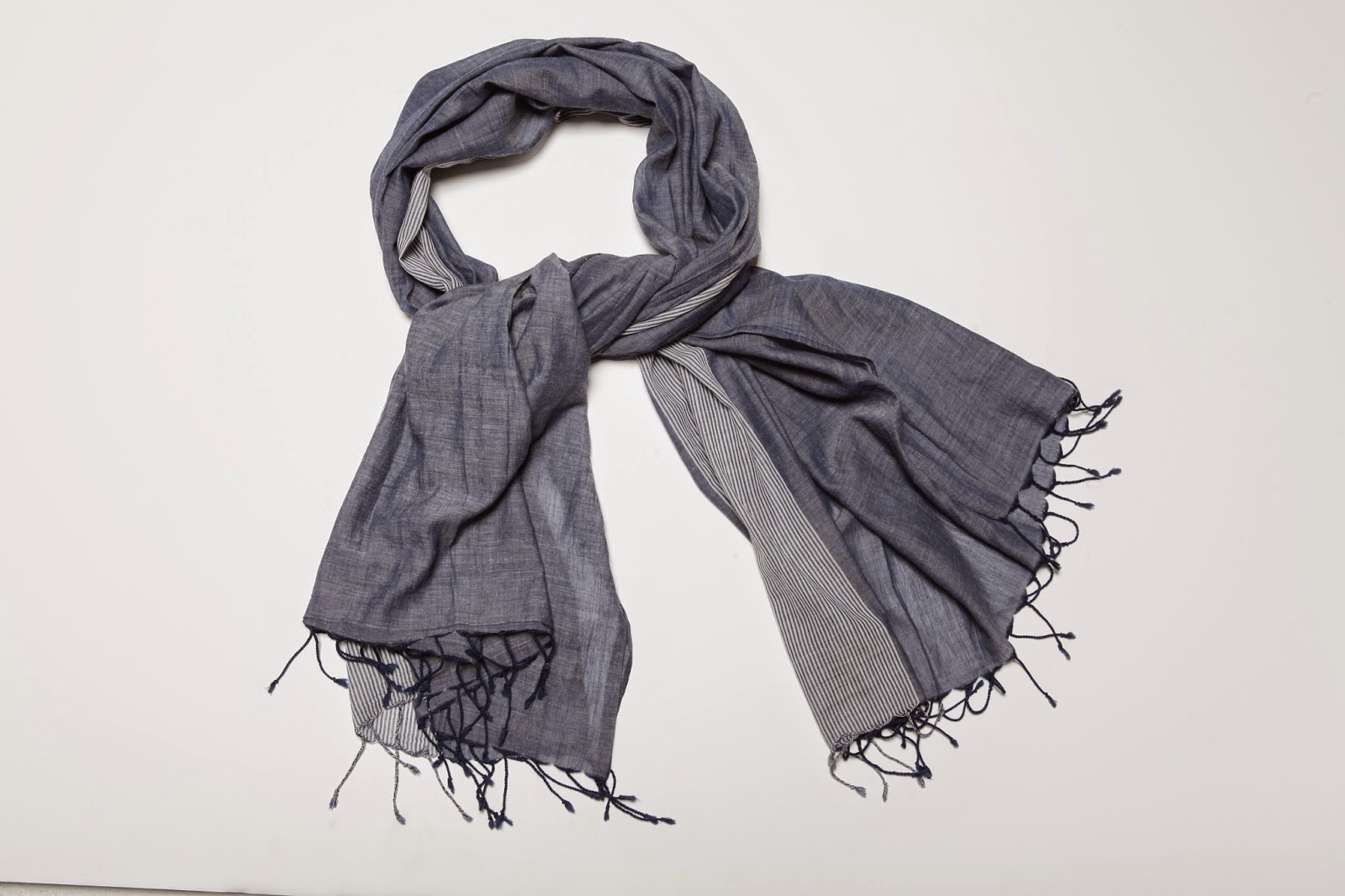
One of our khadi fabrics.
"Faded Denim" is one of our most popular khadi scarves/
Years ago, I did a story about how a multi-national chemical company swooped in and patented the active ingredients of the neem tree. The neem tree is omni-present in every village in India and knowledge of it’s uses have been passed down through the ages. Considered sacred, every part of this amazing tree has a use. Most commonly, the twigs are used as a poor man’s tooth brush.

My parents grew up using a neem twig to clean their teeth and gums every morning and you can still see small twigs for sale in village markets.  The leaves, the bark, the wood all have medicinal uses from everything from an insecticide to birth control. In 1992, W.R. Grace, using U.S. patent laws secured rights to the active ingredient and claimed it as their own. They also started suing Indian companies who were making incesticide using the same ingredients – something they had learned from the common cultural knowledge.

Since then this case has become an international dispute – and launched the idea of ‘biopiracy,’ around the world. The question is defining  ‘intellectual property’ as belonging to a culture that birthed the idea or the multi-national corporation, which created a product from this knowledge as well as its own research? For now, the patent is still standing, despite efforts to revoke it.

Now the exquisite hand-woven fabric called “khadi’ is facing the same battle.  Khadi is the original Indian textile – seen as the ultimate symbol of sustainability. No energy is required at all to make cotton fiber into this fabric. The great Mahatma Gandhi celebrated weaving khadi as a meditation and a way for India’s masses to sustain themselves with dignity.
I have to agree with him. I’ve been to rural are as where there is no reliable water or electricity – and yet, khadi spinning and weaving sustains everyone.

It seems that just as the Indian government is finding some success in promoting ‘khadi’ as a brand, companies in Germany, Spain and Hungary have trademarked the name ‘khadi’ and applied it to everything from machine-made cloth to shampoo in European markets.
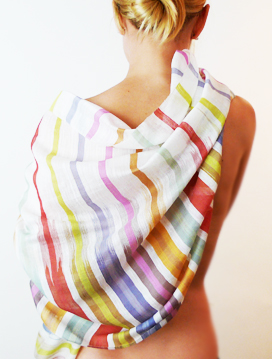
In 'Khadi Coil" we mix silk with cotton khadi threads.

It seems the word ‘khadi’ is becoming one of those words that can be applied to any product that the producers want to be seen as ‘eco-friendly.’ What do you think? 

Among textile lovers, real 'khadi' is treasured like gold. It’s not easy to find real khadi – cloth where the yarn is actually twisted together by hand.  This hand-twisting makes the fabric incredibly soft – in part because the fibers have been handled so much.

Unlike fibers that go into mills to be processed into cloth – khadi does not require any chemicals to be processed.   A simple starch made with Basmati rice and water is used to strengthen the fiber when weaving  – and then washed it out after it is taken off the loom.

Indigo Handloom already offers hundreds of varieties of ‘khadi.’  I continue to search for more to offer our customers - as a way of preserving this amazing fabric and keep this knowledge alive.

For now, the Indian government is mulling ‘future course of action’ including taking the issue up with the EU. Let’s hope khadi fares better than the neem tree.

Friday, October 19, 2012

Our Next Step: Crowdfunding

Last week I spent four days at SOCAP  - also known as Social Capital Markets – a convergence of social entrepeneurs and investors who are looking to make an impact in the world.
 
I went partly to learn from other entrepreneurs, partly to learn more about the whole impact investing world.

I walked from seminar to seminar and the one entrepreneur who's story I most resonated with the most was a young man who was trying to build grocery stores in a depressed area of Oakland, California. The area had a population that represented up to $47 million in groceries every years – yet it was a wasteland for groceries. No major grocery chain would build there.  
For many of the residences of West Oakland, getting high quality fresh vegetables and other groceries would mean several bus trips or expensive cab services. 

So not surprisingly, many of them relied on what was offered at their local convenience store. If you've ever tried to put together a meal from one of these places, you know that a combo of beef jerky and Snickers is sometimes your only option for dinner.

I listened to how he had gone through all the hoops that stand in the way of getting investment. He applied for all the grants, the scholarships and the opportunities to pitch to investors. 

He said that everyone agreed this was a noble, worthwhile idea - but when it came down to it - very few investors were interested in the small profit margins that are typical in retail grocery stores. Others balked at the idea that this entrepreneur was committed to making sure this grocery store maintained its independence instead of having a 5-year exit strategy.  

Instead he turned to the people who were really going to benefit from this grocery store and asked them to pitch in and help. He explained a new law that would allow ordinary people to invest in corporations - without being accredited. 

The way he did this was to offer his customers 10-year notes that would allow the grocery store to be built and maintained - and they would be paid back in the form of groceries. 

In effect, he gained a bunch of micro-investors, they prepaid for their groceries by investing and the store stays open. This was the next level of 'crowd-funding,' and I like the sound of it! 

The world of Kickstarter, Indiegogo and all the other crowd funding sites is wiping away the middle-man-decision-maker. Instead of waiting for the angel investors of the world to decide what idea to fund and bring to life and which to leave on the shelf, the customer is put into the driver's seat.

Don't like that there isn't a dry cleaner on your block that doesn't use harsh chemicals? Find one that does and donate to its survival. Ever feel the annoyance of seeing something on a fashion runway you love but which you never see in a store - nevermind - in the future you just 'vote' for it to be put into production. 

I recently learned of a promising drug for Alzheimer's that is based on a natural substance. Even though preliminary trials showed great promise, the article I read said that no pharmaceutical company was interested in developing it and without ‘big pharma’ spending the approximately $1 billion it takes to get a drug through the FDA, it was just languishing. 

I say if there are 5 million Americans suffering from this disease - and who would be directly affected by whatever benefit it might provide - shouldn't they be given the chance to fund its research?

The other reason I love this new age of crowd funding is because it democratizes the investment process. Instead of trying to find those few wealthy individuals who are willing to invest in Indigo Handloom, I’d rather build a community of people who share our passion for sustainability, for preserving cultural skills and art forms and for giving people the dignity of work. 

I would greatly prefer an investor who is sincerely committed to the growth of Indigo Handloom and who loves our fabrics and what we do over an investor who loves our numbers.

I also love that crowd-funder get to have that pride in knowing they supported a company that shares their values. They were the ones who spotted an idea early and had the foresight to support it. 

So I came back from SOCAP and basically canceled my trip to NYC to present my company at Investor's Circle. I also found out Indigo Handloom was not picked to present this round - but we were still invited to showcase our company in an informal booth. I decided that since it coincides with the L.A. Textile Show - it was too difficult to do both. I also thought that right now, I'm more intrigued with the power of crowd-funding.

As for all the donations that came in – first of all – thank you for all those who contributed! It was so heartening to see how many people got behind us so with 24 hours. I will use that money at the next meeting of Investor's Circle in March. I'm not giving up on finding a angel investor- just exploring other options.

So don't be surprised if you see a request to view our Kickstarter or Indigogo video in your inbox some day soon! 

Tuesday, July 31, 2012

Ikat Ikat Everywhere, But Nary A Real One!

Indigo Handloom Denim Ikat


The process of ikat weaving is what inspired me to start Indigo Handloom. 

I was drawn in by this intricate technique where the threads of the fabric are dyed into a design before the endless bundles of threads are put onto the loom.  My first visit to a handloom village was one of the last remaining areas which specialized in 'real' ikat. I stood there dumbfounded as I watched weavers and dyers working together - almost all of them illiterate - to create the most intricate designs of ikat I'd ever seen. 


I've seen Yemeni ikat hanging in museums in Boston, shopped south American style in markets in Peru and seen Thai ikat hanging in shops in Manhattan - but none of it had this level of sophistication and precision.  I think it's safe to say that I know my ikat!

Even while India has the most amazing handweaving skill of any place I've ever seen - ikat is among the most difficult skill to master. When you look at true ikat, imagine someone drawing out the design in their mind  - they don't even map it out ahead of time - and then dyeing each thread in the correct place so that when the thread is woven into the fabric, it sits next to the following thread and the dyed design matches up perfectly.  All this design expertise and artistry - is done from knowledge handed down generations and it still exists in some handloom villages. 

So when the current trend of ikat came about - I was initially excited because I thought it might revive this industry - which like all handloom - is in decline. Unfortunately, the meaning of the word 'ikat' has been completely misunderstood by the West. 

Much like the word 'pashmina' which now seems to mean a large scarf or 'wrap' - not the original meaning which described a kind of fine cashmere wool found in the Indian state of Kashmir and the products made from this handwoven material. 'Real' pashmina shawls cost thousands, but if you ask any New Yorker where to get a 'pashmina' they will point you to the stalls that sell them in a rainbow of colors for 10-bucks each. This polyester junk is not pashmina - but it's hard to argue once a word's meaning has denigrated to this degree.   


"Ikat' has the same problem.  Designer Oscar de la Renta deserves so much credit for starting this trend by going to UUzbekistan and using real ikat in his collections. 


Indigo Handloom's Shadow Ikat in Circus

Unfortunately most of the fashion industry failed to understand that ikat was not a print, but a weave - and just stole the designs worked out by weavers around the world and stamped it as a print onto every fabric from knits to wools. Today if you ask people about ikat, they will assume you want printed fabric. 


Sigh

This would be great but while the world is in love with 'ikat' the same villagers who created the designer are all abandoning their looms because of the lack of work. I don't normally let fashion trends give me anxiety but I'm well aware of how quickly this skill can disappear - not because of the lack of interest in the marketplace - but because of simple ignorance about the process.Those ikat prints are costing the jobs of the very people who developed the designs. 

Indigo Handloom's Shadow Ikat in Graphic
So - now is your  chance to stop being part of the ignorant masses! How to tell if you are purchasing a 'real' ikat or just a cheap imitation print?  Flip the fabric - if the design is equally as vibrant on both sides - that means that is a true yarn-dyed 'ikat.'  

At Indigo Handloom, we are trying to revive ikat into our line of scarves and fabrics. Check out our latest offerings of Denim Ikat,  Ikat Shadow in Circus and in Graphic black and white!


Bonding At An Altitude of 30,000 Feet


I sat next to a man on my flight to New York last week who was on his way to a meeting he was dreading. He had spent his entire life working in the insurance industry and now with only 14 months until retirement, he said he could barely stand to go to work.


He said he was the first person to go to college from his family, the son of immigrants and therefore expected to find a good job and work hard to 'get ahead.'


I would say he's done a good job - he and his wife are financially secure and own their own home. For most of his career he was happy to go to work, to compete and make his company bigger and more profitable. Now, it's painful to think of all the things that go on in this corporate atmosphere that make his stomach turn, he told me. 


Deep in his heart, he wants to do something good. He wants to be aligned with his nature of having some purpose in his life that betters the environment, other people or the world at large. 


His face lit up when he talked about his post-retirement plans of going to a developing country and building houses or volunteering with an international aid organization. So we brainstormed 
about these ideas for the rest of the trip.

I certainly understand this desire. I left a career in journalism because I couldn't stomach the changes in my profession anymore. I went into journalism with a desire to help people - but after the initial high of being a reporter waned, I started to wonder what real impact I was making. Whatever it was, it was too diffuse. The nature of journalism means that you are covering the surface of an issue and once the story is done - you are off to the next story. I knew my role as a journalist was to shed light upon a topic. But what about the next step?


So I decided to focus on one idea, one area and one community - to test my idea that a for-profit business could mix with a social mission. I would provide jobs by employing handloom weavers in villages who desperately needed work, create a beautiful product that I would sell to the rest of the world and then invest back into the weaving community where I worked and therefore have a discernible impact.  


At the time I started, there was no term to describe what I was trying to do - I remember hearing the phrase 'social entrepeneur' for the first time around 2006. Now just six years later, the idea and interest in social entrepreneurship has exploded. Entire business schools have sprung up and huge organizations like SOCAP and LOHAS have been created to support these new style entrepreneurs.


It seems this itch, this desire to throw yourself into some bigger than yourself, resonates with people more than ever. IN fact, according to the famous English sculptor Henry Moore, it may be the secret to a full, satisfying life.


In his words, "The secret to life is to have a task, something you do your entire life, something you bring everything to, every minute of the day for your whole life. And the most important thing is: It must be something you cannot possibly do.”


Tuesday, July 24, 2012

Peach AND Fuchsia

Walking to the mandap under a banner of fuchsia 

My wedding was truly my vision come to life and so much more. I had a wonderful time and ended up using both the peach as well as the fuchsia handloom fabric. We draped peach on the mandap and I walked under a banner of the fuchsia carried by my brother and three cousins. 
I read about this ancient Hindu tradition in Wikpedia and decided to incorporate it into my wedding.   I've included a few other photos as well - including the moment when my girlfriends picked me up and I body-surfed in my sari over them.  I love that my wedding was a mix of ancient tradition and modern-day silliness....So much fun..it almost makes me want to get married again!
Sitting under the mandap draped with peach handloom
Andre and I sharing a laugh under the mandap.

Tied the knot!

Love this moment!


Friday, June 08, 2012

Fuschia or Peach?


One of the things I love about my business is that – when it comes to fabrics and clothing – I’m really am able to live my philosophy.

So many times, I’d like to buy ‘Made in the U.S.’ to keep people employed here but if you’ve every tried it, it’s more difficult that it sounds! First thing you have to do it get rid of your beloved iphone…and that’s not going to happen.

But when it comes to fabric, I really can put my money where my heart is. So now my wedding is a week away – and I have a dilemma…but kind of  a luxurious one. I am wearing fuchsia (tradional colors for an Indian bride are red or pink) and my flower girls are wearing a mix of a lighter shade of fuschia and peach.

Before I was even really sure about the color palette, I designed and order some handloom cotton silk with woven sequins – in two colors: Fuchsia and Peach. Its from the same village where a lot of Indigo Handloom products are made - so I can have my 'people' representing at the wedding. Can't fit the entire village into my cousin's backyard, afterall. 

 I figured I’d use one of them to drape my ‘mandap,’ which is a gazebo-type structure you get married under. The other one, I’d turn into scarves.

Now I can’t make up my mind!  Quick! Help me pick a color!

A Bride's Lament


So I disappeared again – but you’ll have to forgive me. It was really for the best reason:  love. Yes, it happened to me this year. By this time next week, I’ll be able to change my FB status to “married.”

I decided to do a ‘modern’ version of an Indian wedding - partly to please my parents and partly because I wanted all those clothes an Indian bride gets! I’m such a glutton..I have four different outfits over two days.

Most of my extended family is coming, the final menu changes are almost set and we are hoping to strike a balance between Indian and European traditions as my fiancé is originally from Germany. We are having having kebabs as well as brats with sauerkraut; potato somasas with Koestritzer (German) beer.

We are having a bharath (a parade for the groom as he comes to the ceremony) but my groom isn’t coming on the traditional vehicle: a white horse; He’s showing up in a 1967 mustang convertible! Much more his style and I wouldn’t have it any other way.

When I was looking for a lengha to wear at the reception, I was so dismayed that every Indian clothing shop I went to only had bridal lengha made of this plastic netting as a base. This trend started a few years ago in India and it seems to have reached every corner of the design world there. I know netting is easy to embroider on and also very cheap and easy to dye – but it’s still essentially plastic!

I have no idea why so many Indian women put up with it! Ten years ago– when I would go to India – I would lust after all these gorgeous silks and brocades lenghas and saris – many of them handwoven from different remote regions of India. Now, even if I had made a trip to India, it’s difficult to find something made without netting. They even make saris out of netting - in a land with the world's most beautiful textiles. I don't get it.

I kept thinking about all those weavers who no longer have work because designers are using this netting. It's more than just fashion - these choices and preferences have real impact on the silk and the handloom industry.  A mill can spit out miles of cheap netting made of plastic so easily - which is great for the factory owner - but it means weavers who used to make their living making beautiful brocades for brides have even less work.    I’m hoping this trend dies down soon and there is a demand for natural fibers and handloom again.

One night after trying several stores in the SF-Bay area, I was so discouraged and stressed out because my wedding date was coming fast. I actually threw up all over my fiancé’s boat (sorry Andre)! It wasn’t seasickness – the boat was still in the dock! It was that bad fabric - it literally makes me sick.
I did end up finding something - with real silk brocade and real chiffon! Yeh!

Thursday, October 27, 2011

Eve Blossom of Lulan Artisans

Here's a great article from Fast Company about Eve Blossom, the creator of Lulan Artisans, a company that, like mine, works directly with traditional handloom weavers to bring their beautiful wares to the international marketplace. While my focus is on Indian handloom, Eve works mostly with weavers in Southeast Asia.

Eve truly is one of the few people in our industry who understands that the purchases the consumer makes not only put money in the pockets of the weavers, their families, and their communities, but that their financial support prevents some of the saddest realities of astute poverty affecting both India and Southeast Asia. The atrocity of human trafficking, a rampant reality in both of these regions, is the primary reason Eve started her business, alerted to its chilling realities by an encounter with someone directly involved in this practice in Vietnam. After thorough research, Eve began to see the clear benefits of a for-profit company that encourages communities to support themselves through sustainable means. As Eve is quoted in the article, "When there's job creation and an economic choice in a community, there's less risk of them falling into human trafficking. When people can achieve a good quality of life, and find stable jobs, they don't tend to sell their children, for example, or to take jobs in the city or in another country with somebody that they don't know well." Eve has also just written a book: Material Change: Design Thinking and the Social Entrepreneurship Movement, to be published by Metropolis Books on October 31, 2011. It's definitely on my must-read list for this fall.

When I moved to San Francisco last year, I organized a dinner for those involved in the business of handloom to meet, eat, and discuss the issues facing our industry. Eve was at that very special dinner, and she impressed us all with the breadth and scope of her vision. I am so excited for her, her business, and her future projects, and I look forward to seeing what she creates next!

Thursday, October 20, 2011

Get Your Handloom Jeans Here!

Some good news among the not-so-good news in the handloom industry... Saurashtra Rachnatmak Samiti, an organization in Gujarat, has found a way to make handloom denim! Now the world’s most popular fabric is being made on a large scale. Let’s hope that the denim designers of the world take note.

Indigo Handloom will soon have our own version of denim, a cotton twill made with hand-twisted cotton called khadi. Look for it in our spring 2012 collection.

Finally, a reason to justify a pair of $400 jeans!

Wednesday, October 19, 2011

Art for Artists’ Sake: The State of Handloom

People sometimes ask me why I would promote other handloom organizations, when conventional wisdom suggests that a business owner should always be wary of the competition.

Here’s the simple reason: the handloom industry and those who produce handloom have too much at stake for me not to support my colleagues. Almost every week, I read news articles detailing the demise of the traditional handloom industry. Incredibly, this amazing art form that has been practiced for hundreds of years is in danger of being wiped out within a decade!

It’s one to thing to mourn the loss of an art form, but I’m concerned primarily with the artists themselves. Most handloom weavers have little or no education and few resources to support themselves or their families. Without the ability to earn money from their weaving, they will either starve or flee to the cities in search of work—adding even more to the growing number of the world’s desperately poor. Here they have this amazing talent with incredible value, and yet, in a matter of years, it will be gone forever—so heartbreaking.

So here’s why I support and promote other handloom organizations: I know that my contribution to this industry and its producers are just a drop in the bucket—there’s just no way I (or any of my colleagues) can do it alone. If someone buys handloom products from another company, it indirectly supports all of us who produce and sell handloom. Indeed, even if a company spends time with me learning about how to use handloom, but then ends up with another supplier, at least handloom as a whole is still being supported. While I’d love to have their business (of course!), I know at the bottom of my heart that they’re still helping me to fulfill my mission.

Interested in learning more? Check out this article about a region in which more than six generations of families have sustained themselves by weaving—until now. While there were once nearly 3,000 weavers in this area, there are now only 142 looms left.

This article details yet another region facing similar circumstances: in the Rangpur district, only 150 weavers now remain in an area that used to support 6,000.


There are many reasons why handloom is declining: changing tastes in the domestic market, the WTO rules governing textiles, and the surging Indian economy. While it’s great to understand the issues facing these artists, I’m concerned more with finding a way to make a difference. Again, not just for the art form that I love, but for the people who produce it.

Tuesday, October 18, 2011

The Wink

A quick, amazing story from this past summer: I was in Manhattan visiting one of Indigo Handloom's private label scarves customers, and it was a crazy hot day...a record high 107 degrees! After the meeting, I stood on the corner of 17th Street and 5th Avenue—talking on the phone and sweating like crazy—until I got completely distracted by a woman walking by in a blue dress.

This wasn't any blue dress—it was actually a sample from the Indigo Handloom clothing line, circa spring 2008! We only made two of these blue and white handloom ikat cotton "prayer" dresses and sold both of them at a sample sale. The fabric of these dresses is truly striking: the weavers wove the prayer "Om Namah Shivaya," which loosely means "I honor the goddess within me," into the cloth using the ancient dyeing technique of ikat.

Of course, I got off the phone and stopped the woman. The proud owner of the dress, Melissa Milgrom, recognized me almost immediately and said, "Aren't you that designer from Dumbo?" The "prayer" dress, she said, was her absolute favorite summer dress, and that she "gets compliments every time I wear it." She had paired it that day with some adorable blue and white wedges, big sunglasses, and a sun hat. Perfect styling!

She also said that she and her friend, another customer, "mourned the end" of the Indigo Handloom store in Dumbo. I was so happy to tell her that I would be up and running under my new label, Smita Paul Design, very soon.

Launching a new project, while exciting, is always a bit scary—this little "wink" from the universe came exactly when I needed it the most.

Thursday, October 13, 2011

The Fair Trade Certification Process


For years, I’ve been trying to find a fair trade certifying agency that knows how to handle a company partly based in the U.S., partly based in India, and without a central manufacturing center. As a true “cottage” industry, all of the work of Indigo Handloom is done in the homes of weavers—this, understandably, makes it harder for certification agencies to evaluate whether or not our manufacturing processes align with their regulations. Thus, although there are a large amount of agencies out there from which to receive certification, none have been a good fit for my company.

It’s not just the idiosyncrasies of Indigo Handloom that have slowed down this process: while there has been incredible movement towards fair trade certification in everything from food, to cotton, to wine, and even to gold, my industry has mostly relied on standards proscribed by what I’ll loosely call “the ethical clothing movement,” which considers the social and environmental factors involved with creating clothing (the treatment of workers, disposal of waste water, chemical residue from dyes and washes, etc.). A great place to start, yes, but nothing as all-encompassing and regulated as fair trade.


Just when I was about to embark on this quest yet again, I got a call from Heather Franzese, Senior Category Manager for Apparel and Linens at Fair Trade USA, an organization based in Oakland, California. At the request of one of our private label clients, she was headed to my village in India to look at the way our production was managed. Heather’s not only working on a pilot program for Fair Trade Certification for apparel—check it out at http://www.fairtradecertified.org/certification/producers/apparel-linens—she’s also focusing on another project that uses mobile phones to promote more stringent social standards and community development. This new program has already been implemented in Peru with the help of an organization called World Of Good. You can read the case study here: http://www.worldofgood.org/our-work/laborlink/.


Fast-forward to last week: Heather just came back from visiting my village, and we are going to meet in October to discuss what’s next in the process of getting Indigo Handloom fair trade certified! While I wasn’t able to be there during her visit, I heard from Heather that our managers did a great job showing her around. When we spoke recently, she said she was “ecstatic” about what she saw there. One thing I’ve always told people—after spending a day in the villages seeing how weavers work, you can understand why they would rather continue receiving a fair wage as a weaver, as opposed to moving to the city to look for a manual labor job. Most weavers have little or no education, but they do have an amazing skill that keeps them out of poverty—provided they are given enough work.

I’m so looking forward to working with Heather and Fair Trade USA, and I’ll definitely let everyone know when we’re certified! Stay tuned.

Look for me on Facebook at Indigo Handloom/Smita Paul Design and on Twitter @smitapaul.

Wednesday, October 12, 2011

Handloom in the 'Hood


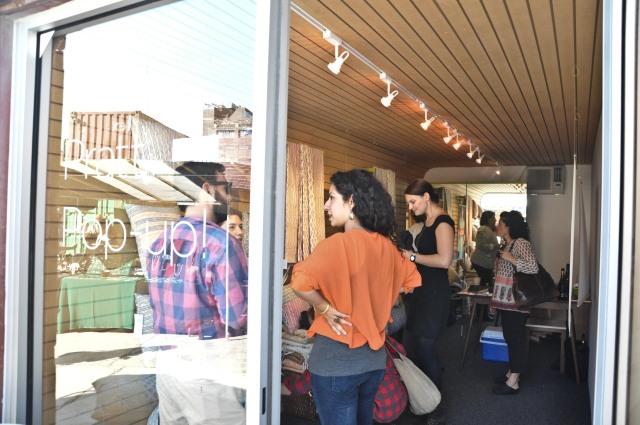
Handloom is coming to my old ‘hood, Fort Greene, Brooklyn! I'm so pleased to see that the handloom organization Tilonia, run by my friend Ellen Fish, will be displaying their wares in lovely Fort Greene through the Pratt Pop-Up! store at Dekalb Market until October 16. I lived in Fort Greene for eight joyful years and started my business in my apartment there, so that area definitely holds a special place in my heart.

Tilonia is a non-profit organization that employs a variety of artisans through the Barefoot College, an NGO that works to improve the lives of the rural poor by addressing basic needs for water, electricity, housing, health, education, and income. Through its production of home goods and accessories, Tilonia creates an income stream for artisans in the Indian state of Rajasthan.

Here’s what I love about the Barefoot College: its work is based upon the belief that though the poor may be uneducated, they still have the fierce desire to provide for themselves and their families. This organization, at work for over thirty-five years, is known especially for their solar energy program, which trains rural women to install solar electricity in their rural, remote, and often non-electrified villages.

The Barefoot College also does important work in many other areas, including health care, environmental causes, and women’s entrepreneurship and empowerment. Because of their inspirational work to support and sustain village life, I’m proud to say that the Barefoot College will be one of the organizations supported by our commitment at smitapauldesign.com to donate 10% of sales to charitable organizations. My hope is to support women from the villages where I work to go through the solar energy program. Until our site launches (stay tuned!), please go out and support Tilonia at Dekalb Market! For pictures of the shop in action (such as the one above), see www.designhope.wordpress.com .